Thứ Bảy, 19 tháng 7, 2025

[Cohort 48] My Teaching with AI: A Personal Reflection Inspired by EDUCAUSE 2024

As an English language teacher, I have witnessed how quickly technology is reshaping the way we teach and learn. After reading the 2024 EDUCAUSE Horizon Report, especially the sections on Artificial Intelligence, I'm convinced that AI will dramatically transform language education over the next two, five, and ten years.
Over the next two years, I expect to utilize AI tools, AI-powered chatbots, and voice recognition apps in my classroom. I think that these tools support teachers in giving students real-time feedback on pronunciation and grammar, making it more immediate and personalized. 

In the next 5 years, AI can become a significant co-teacher. It will assist me in designing adaptive learning paths for students based on their levels, interests, personal preferences, and progress. For instance, platforms with built-in learning analytics will allow me to identify struggling students earlier and monitor more effectively. The report emphasized how AI is enabling “anytime, anywhere learning” and how institutions are being pushed to personalize instruction—this aligns well with my vision of using AI to provide learners with content according to their level, pace, and interests.

Looking ten years ahead, I think that classrooms will become highly individualized and inclusive, where AI plays a crucial role in eliminating obstacles that are about language, accessibility, and the pace of learning. For example, students use an AI tutor actively that speaks English slowly and clearly, adjusts lessons to their level, and gives real-time feedback. It helps them practice speaking with confidence, just like talking to a real person. Ask ChatGPT. I foresee a time when AI can simulate immersive environments such as virtual study abroad experiences that support intercultural communication and global citizenship, the core purposes of language education.

However, I’m also aware of the ethical concerns regarding data privacy, misinformation, and equitable access mentioned in the report. These issues will require teachers to be not only digitally fluent but also ethically aware. Hence, as foreign language teachers, I believe that it is vital for educators to develop professional development and computer skills to ensure that we use AI responsibly.

In conclusion, thanks to the benefits of AI, I will utilise features of AI to integrate into my EFL classroom and use it as a tool to enhance my teaching and better support my students. I’m excited and cautiously optimistic about what’s next.

Thứ Năm, 1 tháng 8, 2024

Reflection_ Final assignment


Implementing Beeclass in my English A1 class has been a game-changer, showcasing the power of digital tools in education. Initially, we struggled with poor homework completion and minimal parental support. Traditional methods just weren't cutting it for creating a consistent homework routine for young learners.

But Beeclass turned things around. At first, only 50% of students were completing their homework. However, by the second lesson, that number jumped to 80%. The platform's reward system and personalized feedback motivated the students, sparking a sense of achievement and healthy competition.

One of the significant benefits has been the improved communication between me and the parents. Regular updates via Beeclass and Zalo have kept parents in the loop, creating a stronger connection between home and school. This steady stream of communication has encouraged parents to support their kids, boosting homework completion rates and helping students manage their time better.

Over three weeks, students started to get into a good homework routine. By the third lesson, 85% were completing their assignments accurately. The interactive features of Beeclass, like games and animations, made learning fun and kept the students engaged.

Of course, there have been a few hiccups along the way. Technical issues, like errors with personal links, sometimes cropped up. If we can iron out these bugs and allow for longer teacher feedback, Beeclass would be even better.

In conclusion, Beeclass has made a huge difference in homework completion, student engagement, and parent-teacher communication. Despite some challenges, its overall impact has been overwhelmingly positive, making it a valuable tool for creating a more supportive and engaging learning environment.


Thứ Bảy, 6 tháng 7, 2024

Reflection week 6

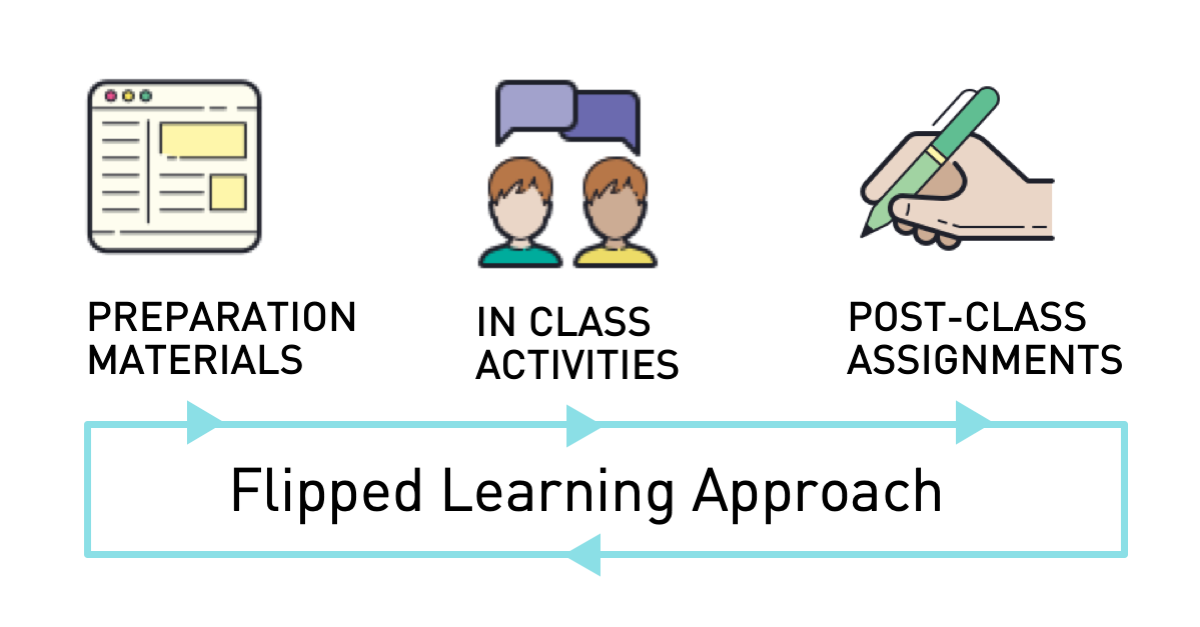
One of the modern learning approaches is flipped learning which encourages learner autonomy. After discussing with my teammates, all of us can find out both the benefits and drawbacks of this type of learning. 

In terms of advantages, flipped learning helps learners a lot. It assists peer-to-peer interaction and collaborative learning during class time. Students are able to take control of their own learning pace and style, accessing and engaging with the material independently. Classroom time is used for interactive, hands-on activities such as discussions, problem-solving, and projects that deepen understanding.

However, we can see that in the Vietnamese education system, it is so challenging to apply flipped learning because of the low level of students and the lack of learning facilities. Additionally, we know that the current assessment system in Vietnam is heavily based on standardized testing, which may not align with the learning outcomes promoted by flipped learning. This could create a mismatch between teaching methods and evaluation. Moreover, parents may not be familiar with or supportive of the flipped learning approach, potentially leading to resistance and lack of support at home for students’ independent study. Finally, effective implementation of flipped learning requires teachers to be well-trained in creating and using digital resources and facilitating active learning in the classroom. This may require substantial professional development. 


Reflection week 5

 Before learning the lesson about "project-based learning" and "rubrics", I have no idea about rubrics. Thanks to my group discussion and materials sent by our teacher, I can utilize technology to support my teaching and create rubrics for the lesson. 


All of my teammates agreed to the convenience of Rubistar (http://rubistar.4teachers.org/index.php)). Thanks to the tool, we could save a huge amount of time when it came to rubrics design. For example, we can choose some items related to the skills we would like to test, and the tool could provide us a detailed rubrics with scoring and criteria. 


However, this tool also has some drawbacks when it comes to "log in" or "sign in". Even though I save the password or write the correct password and account, I can not login anyway. Hence, it's a big deal for users. Besides, there are few functions in the tool. All the rubrics must follow all the requirements of the tool, but the users can not create new criteria. 

Despite the useful benefit of the tool, teachers should be careful when considering the level of students, and contexts of the class, content of the test to create proper criteria. 


Thứ Hai, 17 tháng 6, 2024

Reflection Week 4

The lesson in module 4 is essential for me to cultivate skills related to designing a lesson plan in my teaching journey.
One of the lessons that I have gained from my teacher is that when we create a technology-enhanced lesson plan, we should consider an array of factors. It doesn't mean that I add technology in my lesson as much as possible, I should consider other features such as the level of students, the facilities, the learning conditions, the types of classes, and the content of the lesson. Especially for young students, not every application of technology in lessons is effective. For this group of students, teachers need to consider using physical items to help students interact, touch, and observe more. Therefore, teachers need to consider which lesson content requires the application of technology. If teachers do not consider carefully, technology is like a double-edged sword in teaching, negatively affecting students and their thinking.

I personally found this lesson useful for my colleagues and me to consider the use of technology and alternative ways to consider if technology does not work. All members of my group are also integrating technology into their lessons. However, they also see both positive and negative sides of technology application in learning and teaching. Actually, tools like educational games, simulations, and interactive lessons can make learning more engaging. Besides, videos, animations, and other multimedia resources can cater to different learning styles and make complex topics more understandable. And, students can develop essential skills for the modern workplace, including using software, conducting online research, and understanding digital communication. Nevertheless, excessive use of technology can limit students' opportunities to develop interpersonal and social skills. In addition, overreliance on digital communication may affect the development of verbal and non-verbal communication skills.

The integration of technology in education presents both exciting opportunities and significant challenges. It’s essential to balance its use with traditional teaching methods and to address potential downsides proactively. 


Chủ Nhật, 2 tháng 6, 2024

Week 3_ Reflection

At this moment, I would like to say that I have been learning plenty of useful information from the course. Module 3 provides me with knowledge related to teaching aural/ oral skills, speaking lesson plans, websites to explore, and social bookmarking. In this journal, I would like to reflect on the lesson that I discussed with my teammates about the "Diigo" tool and share my opinion about this tool. 
When it comes to  "Diigo", this tool has both advantages and disadvantages for users to experience. In terms of advantages, Diigo encourages users to save their favorite links about their work or study. They can take advantage of comments to note down some key point information about the link they have. Besides, this tool is so easy to operate and use with the logical interface; hence people may be confronted with little challenges. On the other hand, there are numerous drawbacks users should take into account before experiencing this. The first negative aspect is the difficulty of signing in. Actually, it requires users a huge amount of time to create a new account with their emails but in the end, it doesn't work. Hence, in order to use ít, they must have an available Google account and sign up again. Another drawback of this is about tags. When the users click on the link, there is nothing appearing in the tag even though the users tag some keywords. Therefore, before using this tool, users should consider both its merits and demerits. From my perspective, I prefer using the bookmark of Google to that of Diigo for two reasons: no requirement for signing in or logging in; just one click to save the link I want. 
Moreover, thanks to my group's discussion, I can explore more valuable links of my classmates that support my learners and my lesson. They have shared with me an array of websites that include games, lesson plans, PowerPoint, and book materials such as Yourhomework tool, Beeclass, etc. I am grateful for their sharing because I think that in the future I can use these and lessen the amount of time to find some games or activities that require me to design on my own. 


I admit that technology plays a crucial role in our lives, especially in education. There are a great number of websites and tools that I have not known yet. It is essential for me to allocate more time to discover them and try to apply them in ELT. 


Don't hesitate to ask me any questions or give me comments. ^^


Chủ Nhật, 26 tháng 5, 2024

Week 2 Reflection


I vividly remember the first time I explored information about the ABCD model, there was nothing on my mind. Besides referring knowledge to the teacher, I also searched a lot of information on Google to help me understand more about this. However, after discussing with my teammates today, I have had a deeper understanding of this model and how to make my learning objectives more effective and accurate. 

Actually, I can gain a great number of ideas from my group. Different individuals have their own objectives that are designed based on the ABCD model and their students' backgrounds. Before starting to write a learning objective, all members of my team gave a very detailed and straightforward class description for us to understand the context and general information about students. We are able to identify the different factors of the Framework and apply them in developing objectives as well. First of all, thanks to Hai Duong's learning objective, I take a lesson for myself and my friend that we should be careful when considering writing an objective for the whole lesson instead of an exercise in a lesson whose mistake we found in her assignment. Besides, I acknowledge that while pondering about degree, teachers can use many factors to deliver "how well" of students such as time limit, range of accuracy, proportion of correct responses required, and/or qualitative standards, etc. Additionally, Phuong's sharing encourages me to think about the question "Should we always include an estimated number or proportion in the Degree section (e.g.: at least 80 % of accuracy)?". In our opinion, we should mention this in order to ensure the purpose of students' achievement after the lesson and have a clear objective. Another question raised in her section is "Is it advisable to change the position of A, B, C, or D flexibly?" By cooperating with each other and receiving the suggestion of our teacher, we understand that we can change four features in a different position providing that we ensure the purpose of an objective and logical sentence. In addition, Nhung also gave many creative ideas about their objective. However, she made small mistakes about the selection of the proper condition (C) and the unclear degree (D), then, based on our advice, she could create her second version for the objective. The last objective of Van Anh is quite good, all A, B, C, and D parts are comprehensive and explicit; hence, we just gave feedback about choosing suitable verbs and sentence expressions.

Furthermore, during class discussions after break-out Zoom, I have broadened my horizons about searching engines that support teaching and learning. Some websites are quite similar to Google in terms of interface, and ways of operation; others that focus on slides, pictures, and academic learning are distinct from Google. Teachers can take advantage of utilizing these websites instead of relying on merely Google. 

From my perspective, this module plays a crucial role in my teaching journey because I have more search engines assisting in teaching the second language and cultivating skills to build a learning objective. Honestly, before learning this lesson, I just wrote objectives spontaneously without taking any framework into consideration. Correctly determining and implementing an objective helps not only teachers but also students understand the tasks, content, knowledge, and goals they need to achieve in each lesson.

Don't hesitate to ask me any questions or give me comments. 💓

[Cohort 48] My Teaching with AI: A Personal Reflection Inspired by EDUCAUSE 2024

As an English language teacher, I have witnessed how quickly technology is reshaping the way we teach and learn. After reading the 2024 EDUC...